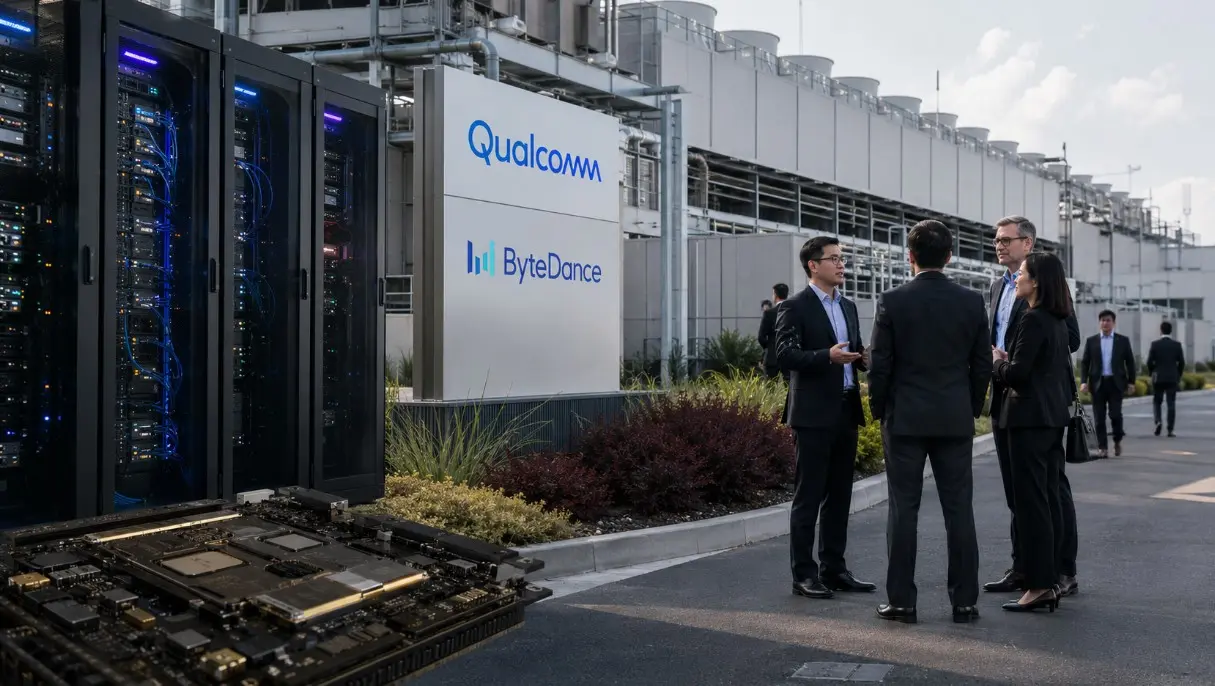
Qualcomm and ByteDance Strike Major AI Chip Deal Amid US-China Tech Tensions

May 27, 2026
Alex - aiToggler Team
Reviewed by a two-legged human.
The AI world never really slows down, and today’s headline is a deal that could shake up the global chip business. Qualcomm, the US chipmaker, has reportedly reached a major agreement with ByteDance, the Chinese company behind TikTok, to supply advanced AI chips for ByteDance’s data centers. This comes at a time when the US and China are locked in a tense standoff over AI technology and semiconductor supply chains, so the deal is as much about politics as it is about hardware.
Qualcomm looks beyond smartphones
Qualcomm has long been known for its smartphone processors, but the AI boom has the company looking for new territory. According to Bloomberg, Qualcomm will supply ByteDance with millions of application-specific integrated circuits (ASICs) built for AI workloads. These chips are expected to power ByteDance’s expanding AI agent software and data center operations, marking a real step for Qualcomm into the data center world.
This isn’t just a one-off order. As Reuters reports, Qualcomm CEO Cristiano Amon has been talking up the company’s push into CPUs, inference accelerators, and custom ASICs. The ByteDance deal suggests Qualcomm is serious about competing with Nvidia in the AI chip space, especially as more companies look for alternatives to Nvidia’s pricey hardware.
The US-China tech standoff shapes every move
The context here is impossible to ignore. The US government has put strict export controls on advanced chips for Chinese companies, aiming to slow China’s progress in AI and supercomputing. The Qualcomm-ByteDance deal reportedly stays within the “legally acceptable computing thresholds” set by US regulators, so it can move forward without breaking sanctions. Still, it’s a tricky situation. As Bloomberg notes, both US and Chinese companies are trying to push their AI ambitions without crossing regulatory lines.
This fits into a bigger pattern: US tech giants like Google and Meta are investing in custom chips to reduce their reliance on outside suppliers, while Chinese firms are scrambling to build their own alternatives. Before the latest US export restrictions, Nvidia reportedly controlled about 95% of China’s advanced chip market. Now, companies like ByteDance are searching for new partners, and Qualcomm is clearly interested in stepping in.
Why this matters for AI infrastructure
So why should anyone outside the chip industry care? The chips running AI data centers are the foundation for everything from your social media feed to the latest generative AI models. As AI spreads across more industries, the need for powerful, affordable chips keeps growing. Qualcomm’s move shows that the AI chip market is opening up. With ByteDance as a major customer, Qualcomm could become a real contender in the next phase of AI infrastructure.
It’s also a reminder that the AI race isn’t just about clever algorithms or massive datasets. It’s about who controls the hardware. As Reuters points out, the semiconductor trade is now a flashpoint in US-China relations, and every new deal can send ripples through global supply chains and tech policy.
What could happen next
This Qualcomm-ByteDance partnership could put new pressure on both US regulators and Chinese officials. Will the US clamp down even harder? Will China double down on building its own chips? And will other US chipmakers try to follow Qualcomm’s example, or decide the risks aren’t worth it?
I keep coming back to how quickly the AI chip world is changing. Today’s deal is just one sign that the old boundaries are getting blurry. If you care about where AI is headed, these cross-border partnerships are worth watching - they’re where the next big shifts are likely to start.
If you want more takes on the global AI race and what it means for business and society, subscribe for tomorrow’s story.